
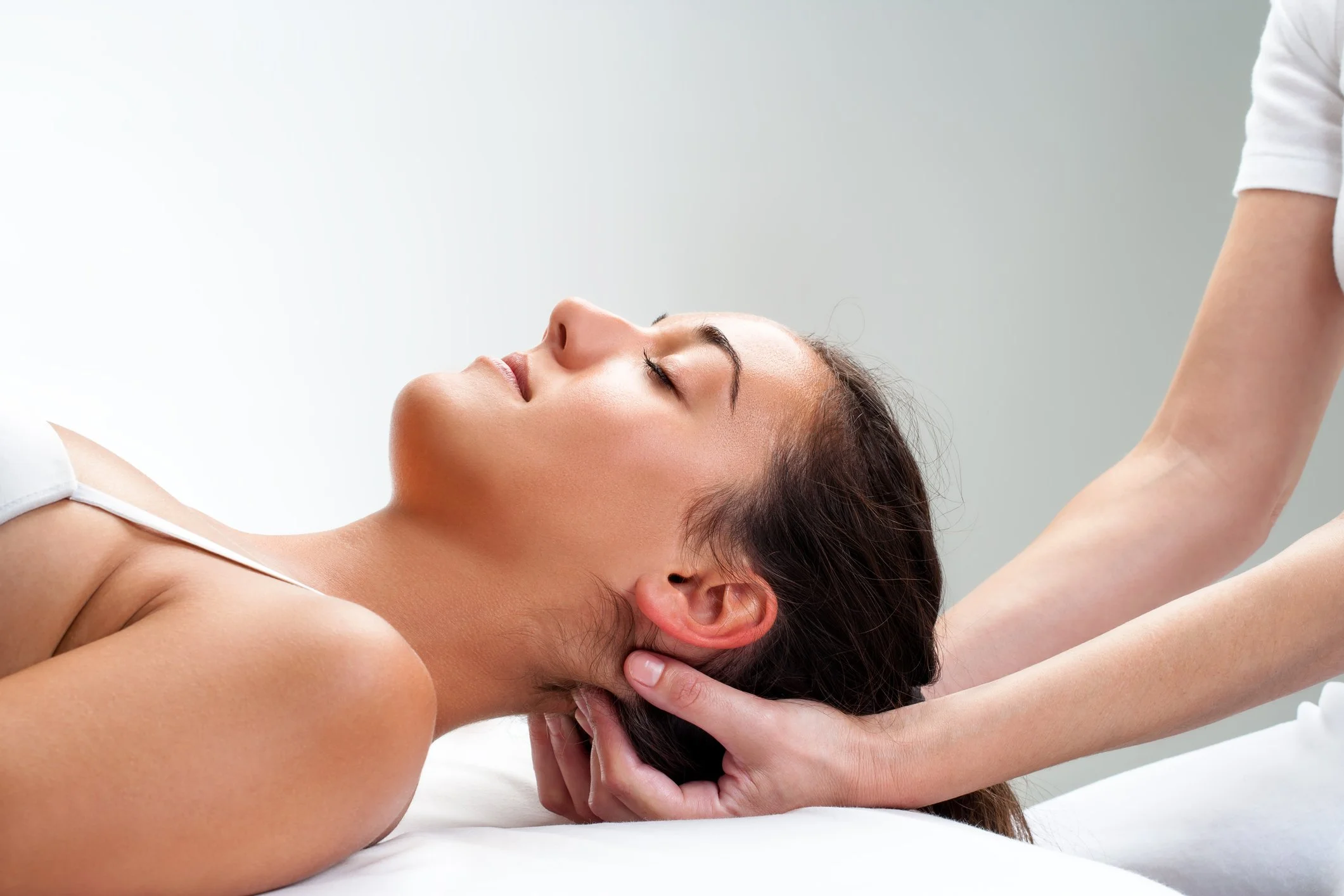
Craniosacral Therapy (CST)
Supporting your body's natural healing and recovery
Craniosacral Therapy (CST)
Gentle treatment. Powerful change.
Craniosacral therapy is a gentle, hands-on treatment that works with the connective tissues, fluid systems and nervous system of the body. It uses light touch with precise hand positions to identify and treat areas of tension, restriction and altered movement.
Although the touch is light, its effects can be powerful. Some of the most profound changes occur under light-touch conditions, as the body begins to shift long-held patterns of guarding, restriction and compensation.
How can Craniosacral Therapy help?
Craniosacral therapy may be helpful when the body is somehow unable to fully recover from stress, injury, illness or a difficult experience. Sometimes there is a clear starting point—a fall, accident, surgery, infection or period of intense stress. At other times, patterns have developed gradually over many years.
People may seek craniosacral therapy for:
Persistent muscular tension or pain
Headaches and jaw tension
Neck, shoulder or back restriction
Stress, anxiety or nervous system overload
Difficulty relaxing or sleeping
Fatigue and a sense of being constantly depleted
Ongoing symptoms following an injury, illness or surgery
A feeling that the body has never completely recovered since a particular event
Rather than forcing change, craniosacral therapy provides gentle sensory and mechanical input that may help the nervous system and connective tissues reorganise around greater ease and mobility.
Craniosacral therapy with Acupuncture or MLD
In my clinic, craniosacral therapy is most often incorporated into an acupuncture or manual lymphatic drainage treatment.
Combined with acupuncture, it can help address both the broader patterns identified through Chinese medicine and the physical or nervous-system restrictions felt through the tissues.
Combined with manual lymphatic drainage, it may support fluid movement while also addressing tension and restriction affecting the connective tissues, diaphragm, abdomen, chest, neck and other important lymphatic pathways.
These therapies complement each other well. The combination allows treatment to be adapted to what your body needs on the day rather than following a fixed formula.
Craniosacral Therapy without Acupuncture
Craniosacral therapy can also be used on its own. It is a particularly useful option for people who are uncomfortable with needles, highly sensitive to treatment or simply prefer a completely hands-on approach.
No needles are required, and the pressure can be adjusted according to your comfort and needs.
What Happens During Treatment?
Craniosacral therapy is performed while you lie comfortably on a treatment table. If being combined with acupuncture or manual lymphatic drainage, you will generally be asked to undress to your underwear in private, and lie comfortably beneath a sheet, and a blanket during cooler weather. When performed without acupuncture or MLD the treatment can be performed fully clothed.
Treatment may involve gentle contact around the head, spine, sacrum, ribs, abdomen, diaphragm, shoulders or other areas relevant to your symptoms. Some techniques are very still, while others involve subtle movement or gentle traction.
Treatment is generally quiet and deeply restful, but quiet does not mean nothing is happening. As restrictions begin to change, you may notice warmth, softening, deeper breathing, small movements, digestive sounds or a sense of increased space and ease within the body.
Is Craniosacral Therapy Suitable for Everyone?
The light and adaptable nature of craniosacral therapy makes it suitable for many people, including those who are sensitive, fatigued or unable to tolerate stronger manual techniques.
Treatment is always adapted to the individual. Craniosacral therapy does not replace medical assessment or treatment, and referral may be recommended when symptoms require further investigation.
A Gentle Pathway Towards Lasting Change
Craniosacral therapy recognises that persistent symptoms are not always confined to the place where they are felt. The body functions as an interconnected system, and restrictions in one area can influence movement, breathing, circulation and comfort elsewhere.
By working gently with these relationships, treatment aims to create the conditions for meaningful change—without forcing the body or overwhelming the nervous system.
SomatoEmotional Release (SER)
SomatoEmotional Release, or SER, is a specialised component of craniosacral therapy that can be used when physical tension seems to have an emotional component, or when treatment reaches a point where the body doesn't seem ready to let something go.
The conversational aspect of SER draws partly from ideas used in Gestalt psychotherapy, including the practice of giving a voice to a sensation, feeling or part of the body and allowing a conversation with it to unfold. It may sound unusual, but the concept isn't entirely unfamiliar. A similar technique is sometimes used in journalling: writing a question with your dominant hand and answering with your non-dominant hand can interrupt your usual analytical way of responding and allow unexpected thoughts, images or associations to emerge.
SER uses a similar idea while working directly with the body. I might maintain gentle contact with an area of tension and ask you to notice it more closely. Does it have a shape, weight, colour, age or texture? If it could speak, what might it say? What does it need? What is its job?
I'm not supplying the answers or interpreting what comes up. My role is to facilitate the conversation and follow your responses. Sometimes absolutely nothing significant emerges. At other times there can be a surprising aha moment — a connection or understanding that seems obvious only once it has been given the opportunity to surface.
What might that look like?
I once worked with a patient who carried significant tightness through her chest following long-term trauma. We didn't need to discuss or relive what had happened. Instead, while gently working with the physical restriction, I asked her to describe the sensation — its weight, age, colour and qualities — and eventually to give it a name and ask whether she could have a conversation with it.
Through that process, she became aware of the tightness as something that had been protecting her heart from being hurt.
Rather than trying to get rid of it, she thanked it for protecting her and asked whether, now that she was safe, it might be able to soften a little. In her own imagery, the tight cage around her chest transformed into a soft pink light that could still represent protection without needing to constrict her.
The physical sensation in her chest changed profoundly during the session.
What I found particularly interesting was what happened afterwards. When her chest began to tighten again during periods of stress or perceived threat, she recognised the sensation, paused, breathed and recalled the image of the soft pink light. She found that the tightness would settle.
The image, its meaning and the solution were entirely hers. I hadn't suggested any of them. I had simply helped facilitate a conversation between her conscious awareness and the sensation she was experiencing in her body.
That is really the essence of SER. It isn't about analysing you, telling you what your body means or making you relive difficult experiences. It's another way of listening — and occasionally what emerges gives us a completely different way of understanding and working with a physical pattern.
I don't use SER with everyone. Sometimes it arises organically during craniosacral treatment; sometimes I may suggest exploring it if I think it could be useful. You are always in control of whether we continue, change direction or stop.