
Questions?
Curious, sceptical or have a practical question? You might find the answer below.
Frequently Asked Questions
-
Yes — but the honest answer is that the strength of the evidence varies depending on what you are treating.
Acupuncture has been researched extensively, particularly for pain and a growing range of other conditions. For some conditions the evidence is reasonably strong; for others it is promising but still developing, and for some we simply don't have enough good-quality research to draw firm conclusions.
I don't think acupuncture needs exaggerated claims to be worthwhile and I can discuss the research relevant to your particular health concern with you, including its limitations.
-
This is a good question, and one researchers have been trying to answer for a long time.
One of the difficulties is that creating a true "placebo acupuncture" is surprisingly complicated. Touching the skin, applying pressure or inserting a needle somewhere other than a traditional acupuncture point may not actually be physiologically inactive, so comparing "real" acupuncture with sham acupuncture isn't quite as straightforward as comparing a medication with a sugar pill.
We do know that acupuncture produces measurable physiological effects. Whether those effects translate into a meaningful clinical benefit depends on what is being treated — which is ultimately the bit that matters to me.
-
Sometimes I can give you a fairly good idea from the outset. Other times, particularly with complex or long-standing problems, the most useful answer comes from seeing how your body responds.
I'll consider what we know from research, what I've seen clinically, your health history and what I find during assessment. If I think acupuncture is worth trying, I'll tell you why. If I don't think I'm likely to be much help, I'll tell you that too.
-
Acupuncture is amazing but it can’t fix everything. I wish it could!
Despite being a useful and significant treatment for a very broad range of issues, it isn't a replacement for every other form of healthcare and it certainly isn't the answer to every symptom.
Part of being a good practitioner is recognising when something falls outside my scope or needs further investigation. If something in your history or presentation makes me think you need to see your GP, have blood tests or imaging, speak to a specialist or seek more urgent medical care, I'll tell you.
I'm very comfortable working alongside conventional medicine and other health practitioners. It doesn't need to be one or the other.
-
I follow Universal Precautions for Infection Control and practise in accordance with Australian professional standards and guidelines set out by the Chinese Medicine Board of Australia (CMBA) and the Australian Acupuncture and Chinese Medicine Association (AACMA).
All acupuncture needles are sterile, single-use and individually packaged. The skin is cleaned with an alcohol wipe before needle insertion, and every needle is disposed of immediately after use in an approved sharps container.
I also follow appropriate hand hygiene, cleaning and disinfection procedures to maintain a clean, safe and comfortable treatment environment.
-
Usually, yes — but I need to know what you're taking and why.
Research suggests acupuncture can generally be performed safely in people taking anticoagulant or antiplatelet medication when appropriate needling technique, location and depth are used. Blood-thinning medication can increase the likelihood of bruising or minor bleeding, and individual risk also depends on the medication, other health conditions and the type of treatment being performed.
Please don't stop prescribed blood-thinning medication in order to have acupuncture. Tell me what you're taking and I'll adapt treatment where necessary.
-
Acupuncture can generally be used safely throughout pregnancy when performed by an appropriately trained practitioner. Pregnancy and fertility have been a significant part of my clinical work for many years, and I have undertaken additional training in this area.
Treatment changes as pregnancy progresses. I take gestation, pregnancy history, current symptoms and any medical or obstetric complications into account, and adapt treatment accordingly.
I've worked with women from the very early weeks of pregnancy through to birth preparation and then post-natal support.
-
For most people, acupuncture is surprisingly comfortable.
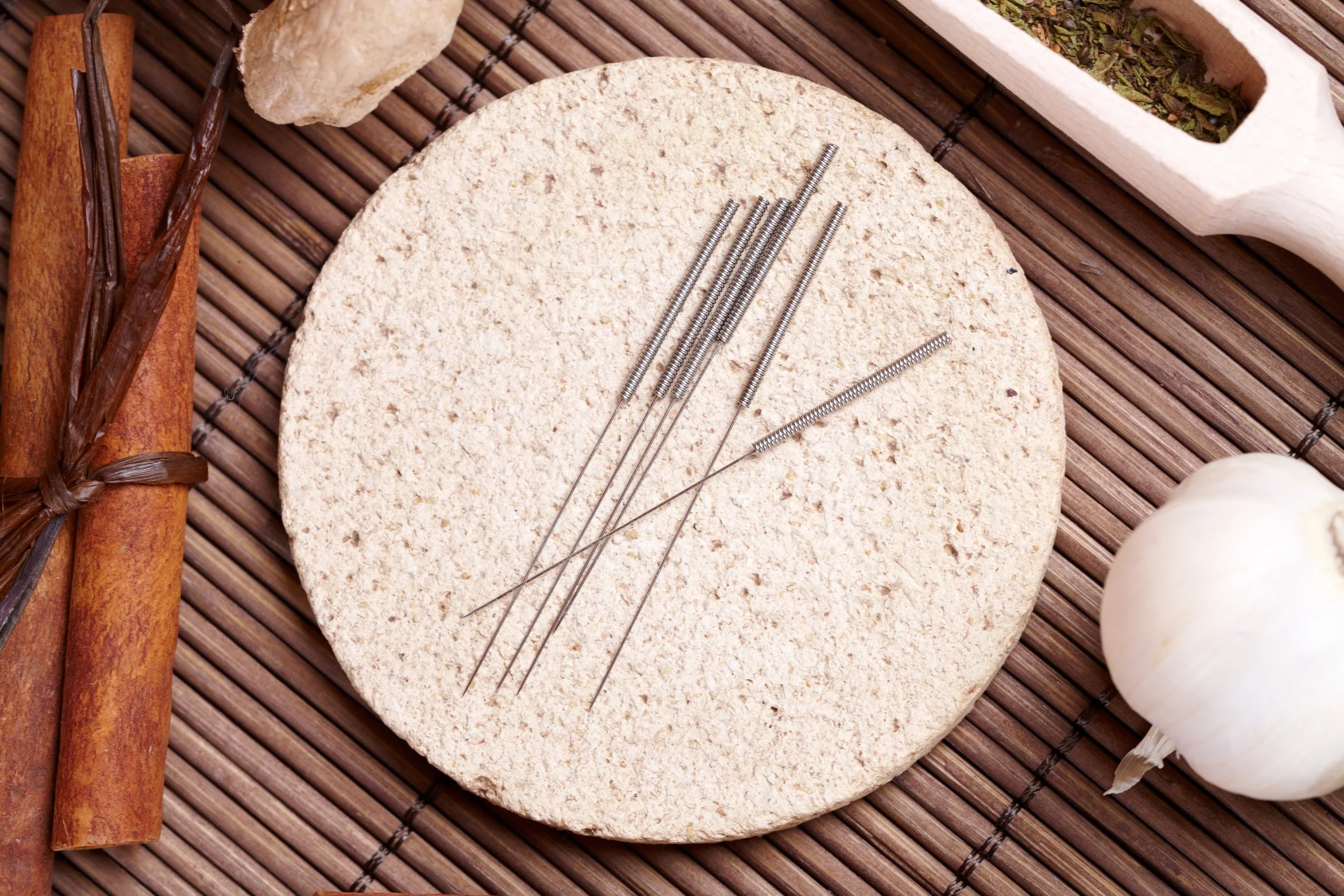
Acupuncture needles are extremely fine and nothing like the hollow needles used for injections or blood tests. You may feel a tiny prick as a needle goes in, and sometimes a dull, heavy, warm, tingling or travelling sensation afterwards.
My style of acupuncture is generally very gentle. I've spent many years studying Japanese acupuncture and other approaches that use very fine needles, careful palpation and minimal stimulation where appropriate.
And if something hurts in a way you don't like, tell me. Treatment doesn't need to be an endurance test.
-
You're in very good company.
Please tell me. I can use fewer needles, finer needles, start very gently and explain as much — or as little — as you'd like as we go. You remain in control of the treatment.
I've treated plenty of people who arrived convinced they hated needles and were surprised by how easy it turned out to be. We can take it slowly.
-
Yes, you are absolutely allowed to be sceptical!
You don't have to believe in acupuncture, Chinese medicine, Qi or anything else for me to treat you. In fact, I quite like a healthy amount of scepticism.
We can simply treat it as an experiment: establish what we're trying to change, give treatment a reasonable trial and see what happens. I’m always up for a challenge! That being said though, it does help the flow of the treatment to be as neutral as possible during the actual session.
-
In Australia, Acupuncturist and Chinese Medicine Practitioner are protected titles, and practitioners must meet national registration standards.
I hold a Bachelor of Health Science in Traditional Chinese Medicine from UTS, am registered with AHPRA and the Chinese Medicine Board of Australia, and have undertaken extensive postgraduate training over more than 20 years of clinical practice.
You don't have to take my word for it — you can look me up on the AHPRA register and the AACMA website to confirm my registration and professional membership.
And if you'd like to know more about my training and experience, you'll find the long version on my About Siegrid page.
-
Yes. I work with children of all ages, from babies through to teenagers, and treatment is always adapted to their age, needs and comfort level.
Children often respond beautifully to gentle treatment. Some of the things parents bring their children to see me for include recurrent coughs, colds and respiratory infections, constantly runny or blocked noses, digestive complaints and stomach aches, difficulty sleeping, poor appetite, slow growth or recovery, and general support when they seem to be getting sick all the time.
I also have a particular interest in working with children and teenagers with ADHD and other neurodivergent presentations. Treatment isn't about trying to change who they are. I focus more on helping to settle an upregulated or "wired" nervous system, with the aim of supporting sleep, emotional regulation, sensory overwhelm and the ability to switch off and recover.
And acupuncture doesn't necessarily mean needles. Depending on the child, I may use very gentle acupuncture or acupressure, craniosacral therapy, massage, moxibustion, dietary and nutritional support or Chinese herbal medicine. I work with what the child is comfortable with — there is absolutely no point turning treatment into a battle.
Dietary advice is similarly realistic. I know perfectly well that telling the parent of a very selective eater to completely overhaul their child's diet isn't necessarily helpful!
The aim is for children to feel safe and comfortable in the clinic and, ideally, to actually enjoy coming.
-
No. As with other healthcare services, the fee is for my time, assessment, clinical expertise and treatment — not a guaranteed outcome.
No practitioner can ethically promise that a particular treatment will work for a particular person. What I can promise is that I'll take your concerns seriously, put thought into your treatment and be honest with you about whether I think we're making useful progress.
If I don't think continuing treatment is worthwhile, I won't keep asking you to come back.
-
Yes. As soon as you feel well enough to travel to the clinic, you can have acupuncture.
Acupuncture can be used throughout chemotherapy, radiation and other cancer treatments to help manage symptoms and support your wellbeing and quality of life.
Treatment is adapted to where you are in your treatment cycle and how you're feeling on the day. I'll also take into account things such as blood counts, infection or bleeding risk, recent surgery, radiation fields, lymph node removal, implanted devices and any other relevant medical considerations.
Cancer support is an area particularly close to my heart and one in which I have both professional and personal experience. Acupuncture and complementary therapies are used alongside — never instead of — your oncology care.
-
Yes, and I prefer it that way when a health problem needs more than one perspective.
Acupuncture and Chinese medicine don't need to exist in a separate universe from the rest of your healthcare. I regularly work with people who are also seeing GPs, specialists, physiotherapists, psychologists, naturopaths and other practitioners.
With your permission, I'm also happy to communicate with other members of your healthcare team when that would be useful.
-
There are many excellent acupuncturists, and convenience matters — particularly if you're likely to need regular treatment.
What I can tell you is what I do differently.
I've been in clinical practice for more than 20 years and don't work from a fixed treatment formula. My background includes Chinese and Japanese acupuncture, specialised palpation methods, Chinese herbal medicine and nutrition. My additional training in craniosacral therapy and lymphatic drainage also brings another layer to the way I assess and treat, and can provide additional insights into what may be contributing to a problem.
I tend to ask a lot of questions, look at the bigger picture and change course when the body gives me new information.
Whether that makes me the right practitioner for you is another question — and I'm always happy to have a conversation if you're unsure.
-
If your extras policy includes acupuncture, generally yes. The amount you can claim varies considerably between funds and policies, including annual limits, so it's worth checking directly with your insurer.
-
Because people don't always fit neatly into one box.
Sometimes acupuncture is exactly what is needed. Sometimes I find that restricted tissue, lymphatic congestion, nervous system tension, nutrition, sleep, medication effects or something else is contributing to the picture.
I don't use every therapy on every person. Having a broad clinical toolbox simply gives me more ways of thinking about a problem and more options when one approach isn't enough.
-
The main difference is how much time and hands-on treatment you need.
A straightforward acupuncture appointment is perfect when we already know what we're working on and the treatment itself is relatively simple. A longer integrative appointment gives us more time for complex presentations, hands-on assessment and treatment, and, where appropriate, incorporating other approaches such as craniosacral or lymphatic techniques.
You don't need to work this out perfectly yourself. If you're unsure which appointment to book, get in touch and I'll point you in the right direction.
-
Life happens. If you need to change your appointment, please give me as much notice as you can.
Appointments cancelled or changed with less than 24 hours' notice may incur a cancellation fee. Obviously genuine emergencies and exceptional circumstances happen, and I'm very reasonable.
The policy is there primarily because late cancellations leave an appointment I usually can't offer to somebody else.
See the Pricing page for full details of the cancellation policy.
-
What you've booked isn't only the treatment — you've reserved a specific block of my working day. When an appointment is cancelled at short notice, I usually can't fill that space, which means that time is lost completely.
A cancellation fee isn't intended as a punishment. It's a way of sharing some of the cost of a late cancellation rather than having the practitioner absorb all of it.
That said, life occasionally throws up unavoidable things at us. I try to apply the policy with compassion while still honouring the value of my time.
-
Wear whatever you like. If you're coming on your lunch break, you can absolutely come in your work clothes.
That said, clothing that's easy to lift or move makes it easier for me to access the areas I need to treat. If your clothing is too restrictive, it's also helpful if it's easy to take on and off so you can lie comfortably on the treatment table with appropriate covering. I typically give people a few minutes to undress and lie under the covering provided before I walk back into the room.
There's really no need to dress specially for acupuncture.
-
You don't need a large meal before treatment, but I generally don't recommend having acupuncture when you haven't eaten for many hours. A light meal or snack beforehand is ideal, particularly if you're prone to feeling faint or have a morning appointment.
It's also preferable to avoid alcohol and, where possible, coffee before treatment.
There are two reasons I prefer you to come without caffeine on board. Firstly, it gives me a clearer picture of your body without the stimulating effects of caffeine influencing things like your pulse and nervous system. Secondly, your body may find it easier to settle into the deeper state of relaxation we're trying to encourage during treatment.
That said, I know plenty of people have coffee as part of their normal day and feel decidedly worse without it! If that's you, have your coffee. You can absolutely still have acupuncture after caffeine — this is a preference, not a rule.
After treatment, I'd generally suggest giving your body a little time to enjoy the effects of the session before reaching for coffee or alcohol. But again, there are no rigid rules.
-
People respond differently.
You may feel deeply relaxed, sleepy, energised, lighter, a little spacey — or simply completely normal. Occasionally symptoms can feel temporarily different or you may notice mild tenderness or bruising around a needle site.
I generally suggest drinking some water, eating normally and giving yourself a little breathing room after treatment if you can. There's usually no need to put the rest of your day on hold.
-
Yes. There is two-hour free parking in the Hume Street Council car park opposite the clinic, and 28 Clarke Street is in the same block as Crows Nest Metro.
There are steps at the front entrance. If you're coming with a pram, I'm very happy to come down and help. For wheelchair access or other mobility needs, there is a single accessible parking space within the building, accessed via the driveway on Oxley Street. Please contact me beforehand so I can arrange access.

“When you let go of who you are, you become who you could be.”
— Jalāl ad-Dīn Muhammad Rūmī